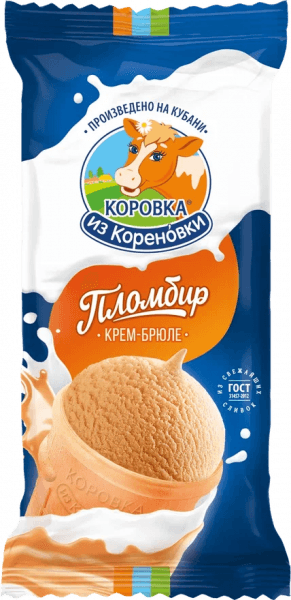
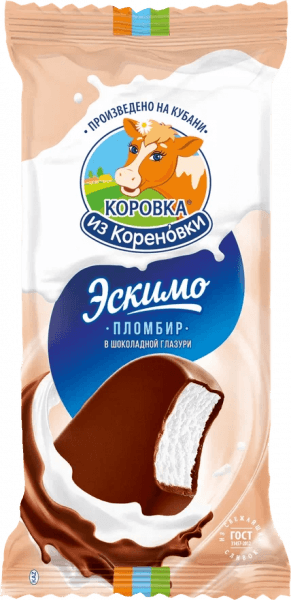
Plombir is a high-butterfat ice cream style from Russia, built on simple dairy ingredients rather than on air and thickeners. What separates it from most freezer-case ice cream is fat. Soviet state standards put plombir at the top of the grading ladder, with a milk-fat minimum commonly cited at roughly 12 to 15 percent, above the lighter milk and cream grades. That fat is not a bonus feature. It is the entire texture.
The name is French and the grade is Soviet, which sounds like a contradiction until you follow the route. A word most often traced to a French spa town ended up, generations later, as a state-defined category of frozen dairy across the USSR. This guide covers where the name came from, what GOST standards traditionally required, why butterfat changes the way a spoon behaves, and how to tell real plombir from a label that is borrowing the word.
What Is Plombir Ice Cream, Exactly?
In Russian, plombir (пломбир) is not a flavor. It is a grade. The Soviet scale traditionally ran from milk ice cream at the bottom, through cream ice cream in the middle, to plombir at the top, defined by the highest milk-fat minimum of the three. So vanilla plombir, chocolate plombir, and creme brulee plombir all sit in the same category and carry different flavors. The word tells you about richness and density. It says nothing about what was stirred in.
That style then shows up in formats: cups, chocolate-coated bars, wafer sandwiches, waffle cones, and sharing logs. A Lakomka bar and a plombir cup belong to the same tradition, and what changes is the shell, the shape, and how you eat it. Format matters more than people expect. A chocolate shell insulates what is underneath, so a bar tends to hold its shape in the hand longer than an open cup does.
Where Does the Name Plombir Come From?
Most accounts point to Plombières-les-Bains, a spa town in eastern France. French cooking has long had a glace Plombières, usually described as a rich custard ice with candied fruit and a note of kirsch. The name is generally said to have traveled east with French cuisine, which shaped Russian dining through the imperial period. A competing folk etymology points instead to the French plomb, meaning lead, and to the lead-lined molds the dessert was supposedly set in. Neither account is settled, and it matters less than what happened next.
The word changed jobs after it arrived. In France it described one specific dessert. In Russian it drifted away from candied fruit and kirsch and attached itself to the character of the base instead: heavy, cold, dairy-forward. By the time Soviet standards were being written, plombir had stopped being a recipe and become a technical term with a number behind it.
How Soviet GOST Standards Shaped Plombir
GOST — gosudarstvenny standart, or state standard — was the Soviet system of mandatory technical specifications, and it covered ice cream in detail. The historical standards graded frozen dairy by milk fat and restricted what else could go in, which kept formulas short and close to the dairy. Plombir was the top grade, with a minimum commonly cited around 12 to 15 percent milk fat. Because the standard was national, the word was meant to carry the same meaning wherever the tub came from.
Two things followed from that. Plombir became a shared reference point rather than a brand, so people learned what it was supposed to taste like and noticed when something fell short. And because additives were limited, producers could not lean on stabilizers and whipped-in air to fake body. The fat had to do the work. That constraint is a large part of why the style still reads differently from most modern supermarket ice cream, and why the word still carries weight with anyone who grew up on it.
One thing worth being precise about: GOST is a historical Soviet state standard, useful for understanding what plombir traditionally meant. It is not a live certification stamped on a tub in an American freezer aisle. Treat the word on a package as a claim about style and richness, then check the ice cream itself.
Why Butterfat Matters to Texture
Ice cream is mostly water, and water wants to form crystals. Fat is what gets in the way. Milk fat sits between growing ice crystals and keeps them from joining into bigger ones, so a high-fat mix freezes into many small crystals instead of a few large ones. Small crystals read as smooth. Fat also coats the tongue, which is why a rich ice cream feels cold rather than sharp, and it carries aroma compounds that water cannot, so the flavor lasts past the swallow.
Air is the other lever. Whipping air into the mix — overrun, in the trade — makes ice cream cheaper by volume and lighter on the spoon. Push it far enough and you are selling foam. Plombir belongs at the dense end of that spectrum: less air, more mix, a block that feels heavy for its size and takes a moment to yield to a spoon straight from the freezer. Weight in the hand is the first honest clue you get, before you have tasted anything.
How to Recognize Real Plombir
There is no badge to look for, and any producer anywhere can print the word on a tub. What you can do is read the object itself. Plombir has a set of behaviors that are hard to fake, because they come from fat and density rather than from the front of the package. Buy one, take it home, and check it against this list.
- It feels heavy for its size, because a dense mix packs more into the same cup than an aerated one does.
- Straight from the freezer it resists the spoon for a second, then softens into a smooth scoop instead of crumbling.
- As it melts it slumps into cream rather than collapsing into foam or holding its shape like a sponge.
- The taste reads as milk and cream first, with vanilla or chocolate arriving second rather than leading.
- The finish is clean, with no waxy film left on the roof of the mouth.
- The Cyrillic word пломбир on the pack tells you the producer is claiming the category, not just naming a flavor.
What Does Plombir Taste Like?
Cold cream, mostly. A good plombir leads with dairy — a cooked-milk sweetness that sits closer to the top of a milk bottle than to a vanilla milkshake. Sugar stays in the background. Vanilla reads as warmth rather than as a top note, and chocolate versions come across as cocoa over cream instead of fudge. Creme brulee, a flavor many people associate with the Soviet-era range, carries a burnt-sugar edge that reads as caramelized dairy rather than candy.
Temperature decides how much of that you actually get. Straight from a home freezer, plombir is cold enough to mute the dairy notes and stiff enough to fight the spoon. Give it a few minutes on the counter and the fat softens, the aroma opens, and the flavor moves from sweet-and-cold to milky-and-round. Let it go too far and the texture turns slack. The window is short, which is why plombir rewards a small spoon and no hurry.
Plombir vs. Gelato: the closest relative
Gelato is the style plombir gets mistaken for, and the confusion is reasonable: both are churned at low overrun, so both eat dense rather than fluffy. What separates them is fat and temperature. Gelato is usually built on milk rather than cream and sits lower in fat than plombir, and it is served warm and soft, close to the point where it would lose its shape. Plombir is served hard and cold, and expects to be worked at with a spoon for the first minute.
That temperature gap decides what each style can do. Gelato leads with flavor, because warmth releases aroma immediately, which is why pistachio and hazelnut are the versions people judge a gelateria by. Plombir leads with dairy, because deep cold suppresses everything sitting on top of it, which is why plain vanilla is the version people judge a plombir producer by. The comparison with American ice cream runs on different variables entirely — fat floors, overrun, and stabilizers — and has its own guide.
Where Korovka iz Korenovki Fits
Korovka iz Korenovki (Коровка из Кореновки) is a Russian dairy brand from Korenovsk in Krasnodar Krai, made at a dairy that has been in production since 1952. The lineup covers the formats above: Plombir cups, Lakomka bars under a chocolate shell, chocolate-coated Eskimo bars, waffle cones, Poleno sharing logs, and wafer sandwiches. In the United States it is distributed by Ice Country LLC at korovkaicecream.com.
Ordering is direct. There is a $65 order minimum, and local delivery is free in South Florida and New York City, temperature-controlled and arriving frozen. There is an iOS app if you would rather order from your phone. Retailers can apply for wholesale at /signup, covering the Northeast — New York, New Jersey, Pennsylvania, Connecticut, Massachusetts, Rhode Island, New Hampshire, Vermont, and Maine — plus Florida. Questions go to info@icecountry.com or +1 (475) 309-8943.
Frequently asked
Is plombir the same as regular ice cream?
Not quite. Plombir is a category defined by fat rather than a flavor or a brand name. Historical Soviet standards placed it above the milk and cream grades, with a higher milk-fat minimum and limits on what else could be added. In practice that means a denser, richer product that tastes of dairy first.
Is plombir Russian or French?
Both, in different ways. The name is usually traced to Plombières-les-Bains, a French spa town, and to the rich custard ice associated with it. The category as people know it today — the fat grade, the density, the plain dairy character — took shape in the Soviet Union and is Russian in everyday use.
What does GOST mean on Soviet ice cream?
GOST is short for gosudarstvenny standart, the Soviet system of mandatory state technical specifications. It set out how food had to be made, including the minimum milk fat for each ice cream grade. Treat it as a historical reference point for what plombir traditionally meant, not as a modern certification on any particular tub.
Why does plombir taste richer than other ice cream?
Two reasons, and they work together. Higher milk fat coats the tongue and carries flavor longer, and a denser mix with less whipped-in air puts more actual ice cream in every spoonful. Lighter, airier products fill the same volume with air, which thins both the body and the finish.
Is plombir the same thing as gelato?
No, though they are close cousins. Both are churned with little air, so both eat dense. Gelato is usually milk-based and lower in fat, and it is served warm and soft so the flavor comes forward immediately. Plombir is cream-based, higher in fat, and served hard and cold, so dairy leads and the flavoring arrives behind it.
Where can I buy Korovka plombir in the United States?
Korovka iz Korenovki is distributed in the US by Ice Country LLC. Order online at korovkaicecream.com with a $65 order minimum, or through the iOS app. Local delivery is free in South Florida and New York City, temperature-controlled and arriving frozen. Retailers in the Northeast and Florida can sign up for wholesale at /signup.