GOST stands for gosudarstvenny standart, Russian for state standard. On a tub of Russian ice cream, a GOST number is a claim that the product was built to a published national specification instead of to a recipe the factory wrote for itself. In the Soviet era those specifications carried the force of law. Today most GOST standards are voluntary, which is precisely why the four letters still carry weight with shoppers who know what they are looking at.
This guide covers what GOST standards historically demanded of ice cream: minimum milk fat by grade, limits on replacing dairy fat with vegetable fat, and naming rules that decide whether a product may be called plombir at all. It also covers the honest limits of the label. GOST is a conformity claim rather than a medal, the numbers shifted between revisions, and on a pack sold in the United States it may not appear anywhere.
What Does GOST Stand For?
GOST is an acronym for gosudarstvenny standart, государственный стандарт, or state standard. It grew out of Soviet standardization work that began in the 1920s, though the GOST designation itself came into use later. The system eventually covered an enormous range of manufactured goods, food included. In a planned economy there were no rival brands to compare, so the standard did the job branding does in a market. It told you what was in the box.
Ice cream got a standard of its own during the Soviet period, and the version popular accounts cite most often is a 1941 document usually referenced as GOST 117-41. Treat that reference with some caution. It is repeated far more often than it is sourced, and most people quoting it have never seen the document. The safer statement is the general one: Soviet standards set a milk fat floor for plombir and restricted what could be substituted for dairy.
The numbering is simple once you see it. A GOST reference is a standard number, a dash, and the year that version was adopted. So the digits after the dash are a date, not a batch code. That single habit makes old packaging legible: a 1941 suffix and a 2012 suffix describe two different documents about the same food, written seventy years apart.
What GOST Standards Required of Ice Cream
The heart of the ice cream standards is a ladder of grades set by milk fat. Milk ice cream, molochnoye, sits at the bottom. Cream ice cream, slivochnoye, sits in the middle. Plombir sits at the top with the highest fat requirement, commonly cited at roughly 12 to 15 percent milk fat. Treat any single percentage you read online as approximate. The figures moved between revisions, and the modern interstate version for these three grades, usually cited as GOST 31457-2012, is generally described as setting a band rather than one flat floor.
The standards reached well past fat. They also spoke to dairy solids, sugar, which stabilizers were permitted, storage temperature, shelf life, and how the finished product had to be described on the wrapper. That last point is the practical one. Two tubs can share a flavor name and belong to different grades, which is why shoppers learned to read the grade word first.
- Milk fat sets the grade, so plombir was a richness class long before it was ever treated as a flavor.
- The exact percentages differ between revisions, so a figure quoted from one decade will not match another precisely.
- The standards governed more than fat, including permitted additives, storage temperature, and shelf life.
- The grade word on the wrapper, not the flavor name, tells a shopper how rich the ice cream will be.
Milk Fat Versus Vegetable Fat: The Rule Behind the Rule
The rule shoppers actually care about is not the fat minimum. It is the block on quietly swapping dairy fat for cheaper vegetable fat. Under the dairy naming rules that apply in Russia and across the Eurasian Economic Union, a frozen dessert made with vegetable fat is not supposed to be sold under the plain dairy names. It has to be described as a product containing a milk fat substitute. The wording on the pack must change, and that change is the tell.
That principle lives in a mandatory technical regulation on milk and dairy products, usually referenced as TR TS 033/2013, rather than inside GOST itself. The distinction is worth keeping straight. A technical regulation is binding law about safety and naming. A GOST is a specification a producer may choose to meet. In practice the two work as a pair: the regulation decides what a product may be called, and the GOST describes how that product has to be built.
GOST vs. TU: The Distinction Most Shoppers Miss
In the post-Soviet period GOST compliance stopped being compulsory for most foods. Mandatory requirements moved into technical regulations, and the standards themselves became something a producer opts into. Producers can instead manufacture under TU, tekhnicheskiye usloviya, meaning technical specifications, or under STO, an organization's own standard. Both are written and registered by the company itself. A TU product is perfectly legal and can be very good.
That is the whole source of the GOST aura. Printing a GOST number means choosing to be measured against a fixed public yardstick when nothing forces you to be. The published standard can be looked up by anyone: a shopper, a competitor, or an inspector. A TU is registered, but it is the company's own document, and it is not written to be read by the person holding the tub. Neither route makes an ice cream good or bad on its own. The difference is who set the parameters, and whether an outsider can check them.
Why Shoppers Still Look for GOST
In a freezer case in Brooklyn or South Florida, GOST does two jobs at once. It is a technical claim, and it is a memory. Many shoppers who grew up on Soviet-era ice cream are looking for one particular sensation: dense, very cold, cleanly dairy, without the whipped lightness that lets a scoop vanish on the tongue. The grade word is the closest thing on a pack to a promise of that texture.
It helps to be precise about why. Fat is one lever. The other is air. All ice cream is partly air, whipped in during freezing, and the more air there is, the softer and faster-melting the result. A rich, low-air ice cream eats dense and cold and takes a moment to give way under the spoon. That is the texture the plombir grade points at, and it is why the word keeps getting used as shorthand for quality by people who have never read a standard in their lives.
How to Read a Russian Ice Cream Label
Start with the grade word rather than the flavor. Then look for the standard reference, usually set in small type near the composition. GOST 31457-2012, for example, reads as the 2012 revision of standard 31457, the interstate standard covering milk, cream, and plombir ice cream. A ГОСТ Р prefix marks a Russian national standard instead of an interstate one shared across several post-Soviet countries. If the pack shows ТУ where you expected ГОСТ, the recipe belongs to the company, not to a public document.
- Find the grade word first: молочное is milk, сливочное is cream, and пломбир is the richest of the three.
- Digits after the dash in a GOST number are the year that version was adopted, not a lot or batch code.
- A ГОСТ Р prefix means a Russian national standard, while a plain ГОСТ number is generally an interstate one.
- ТУ or СТО means the producer wrote and registered its own specification instead of following a published one.
- Any wording about a milk fat substitute or vegetable fat means the product is not a straight dairy plombir.
What a GOST Number Does Not Tell You
GOST is not an award and it is not a taste test. It is a claim of conformity to a written document, and in many cases the producer declares that conformity rather than earning a third-party seal. It says nothing about the quality of the cream that went in, the care taken during freezing, or whether the product stayed properly frozen on the way to your kitchen. Two ice creams can meet the same standard and still taste clearly different from one another.
It also may not appear at all on a pack sold in the United States. Imported food is labeled for the market where it is sold, so a US pack follows US labeling rules and carries the panels required here. Read GOST as useful background about how a product is made in its home market, then judge the ice cream itself.
Where Korovka iz Korenovki Fits
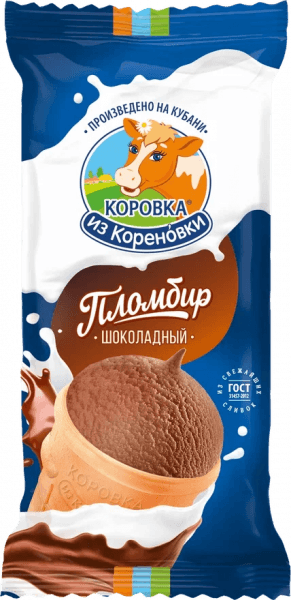
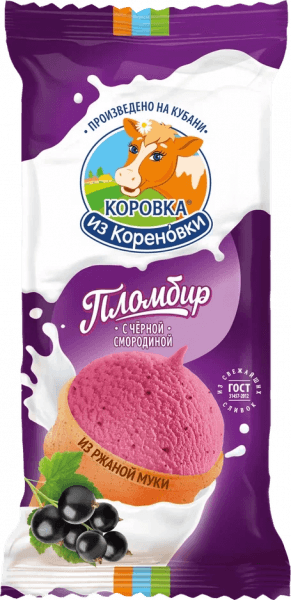
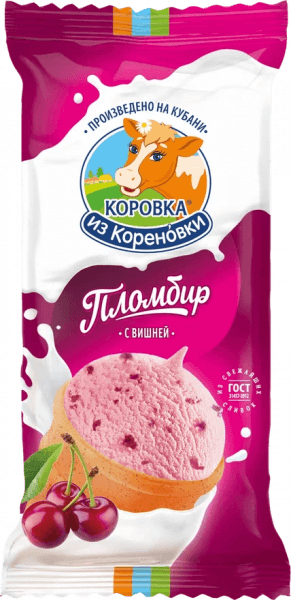
Korovka iz Korenovki is a Russian dairy brand from Korenovsk, in Krasnodar Krai, where the plant has been in production since 1952. Its plombir belongs to the style this page describes: dense, cream-forward, built for the spoon to drag rather than glide. It comes in the formats people remember, including cups, Lakomka and Eskimo bars, waffle cones, Poleno sharing logs, and wafer sandwiches. In the United States it is distributed by Ice Country LLC.
Ordering direct starts at a $65 minimum. Local delivery in South Florida and New York City is free and temperature-controlled, and it arrives frozen. Wholesale accounts are served across the Northeast, in New York, New Jersey, Pennsylvania, Connecticut, Massachusetts, Rhode Island, New Hampshire, Vermont, and Maine, plus Florida. Retailers can sign up at /signup. There is also an iOS app. Questions go to info@icecountry.com or +1 (475) 309-8943.
Frequently asked
What does GOST stand for?
GOST is short for gosudarstvenny standart, государственный стандарт, meaning state standard. It grew out of Soviet standardization work that began in the 1920s and continues today in Russia and, through interstate standards, across several post-Soviet countries. On food it identifies the published specification a product was made to.
Is GOST still used today?
Yes, but its status changed. In the Soviet Union GOST compliance was mandatory. In the post-Soviet period most GOST standards became voluntary, and mandatory requirements moved into technical regulations. A producer today can follow a GOST or write its own TU specification, so printing a GOST number is now a choice rather than an obligation.
What is the GOST standard for ice cream?
The interstate standard usually cited for milk, cream, and plombir ice cream is GOST 31457-2012. Earlier Soviet versions existed, and popular accounts most often point to a 1941 standard referenced as GOST 117-41, though that reference is repeated far more often than it is sourced. Because requirements were revised over the decades, exact figures depend on which version is being quoted.
Does a GOST number mean there is no palm oil?
The naming rules do most of that work. Under the dairy regulations applied in Russia and the Eurasian Economic Union, a frozen dessert made with vegetable fat is not supposed to be sold under the plain dairy names such as plombir. It must be labeled as containing a milk fat substitute, so the wording on the pack changes.
Why does GOST matter so much for plombir specifically?
Because plombir is a grade, not a flavor. What separates plombir from lighter grades is the milk fat requirement, and that requirement is defined in the standard. Without a specification behind it, the word plombir becomes marketing. With one, it describes a measurable level of richness and the dense texture that follows from it.
Will I see a GOST number on Russian ice cream sold in the United States?
Not necessarily. Imported food is labeled for the market where it is sold, so a US pack follows US labeling rules and carries the panels required here. The absence of a GOST reference on an American label does not tell you how the product was made in its home market.