The main types of Russian ice cream are sorted by format, not by flavor: the plombir cup, the Lakomka bar under its thick chocolate shell, the Eskimo bar on a stick, the waffle cone or rozhok, the Poleno sharing log, and the wafer sandwich. Each one is a different answer to the same question, which is how you are meant to eat it. Flavor comes second. Pick the shape first.
That order of operations surprises American shoppers, who tend to choose chocolate or vanilla and then take whatever container it arrives in. In Russian and Soviet food culture the format is the product. A cup is a sit-down dessert. A bar is a walk-around one. A Poleno goes on a plate and gets sliced for guests. This guide covers all six, what sets each apart, how each one behaves once it leaves the freezer, and when to reach for it.
The six types of Russian ice cream, at a glance
Every format below is built on the same foundation: plombir, the high-butterfat style that Soviet standards graded by milk fat rather than by mix-ins. What changes from one to the next is the wrapper, and the wrapper changes almost everything about eating it. It sets how fast the thing melts, how much you get in a bite, whether you need a spoon, and how much of the dairy you actually taste before chocolate or wafer arrives.
Three questions sort the whole list. Are you sitting down or walking? Are you feeding one person or a table? And do you want the ice cream to lead or the coating? Answer those and the format picks itself. The Russian names are worth learning too, because Eastern European groceries label packaging in Cyrillic, and the format word is usually the largest thing on the wrapper.
- Plombir cup, often labeled стаканчик, meaning little cup: eaten with a spoon, and the clearest read you get on the dairy itself.
- Lakomka (Лакомка): a bar under a chocolate shell thick enough to crack audibly, so chocolate leads every bite.
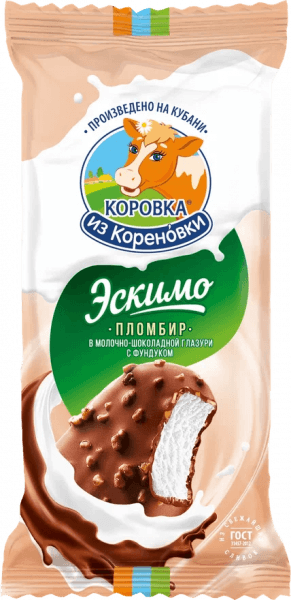
- Eskimo (эскимо): the classic chocolate-coated bar on a stick, and in Russian the word names the format rather than a brand.
- Waffle cone, or rozhok (рожок): filled, capped, and frozen at the factory instead of scooped to order.
- Poleno (полено): a log you slice into rounds and serve on plates, closer to a cake course than to a snack.
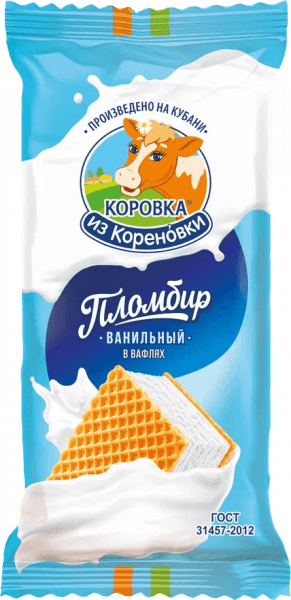
- Wafer sandwich: ice cream pressed between two wafer plates, and the least drippy thing to hand a child.
Plombir cups: what makes plombir different
Plombir (пломбир) is the benchmark. Soviet GOST standards, the historical state specifications for food production, set minimum milk-fat levels for the category, commonly cited at roughly 12 to 15 percent, and restricted what else could go into the mix. High fat does two things you can taste. It slows melting, so the ice cream holds its edge on the spoon. And it coats the palate, which is why plombir reads as rounder and less icy than a low-fat freezer-aisle tub.
The cup is the honest format. There is no shell, no wafer, no coating to hide behind, so a thin mix has nowhere to go. That is why anyone judging a Russian ice cream brand should start with a plain vanilla plombir cup. It is also the most forgiving format on a warm day, because the cup catches whatever softens instead of sending it down your wrist.
Let it sit out for about five minutes before the first spoonful. Straight from a home freezer, plombir is often too hard to taste properly, and cold that deep flattens the flavor you came for. The surface should give under a spoon without turning to soup at the edges. That is the window.
Lakomka: the thick chocolate shell bar
Lakomka (Лакомка) takes its name from the Russian word for a person with a sweet tooth, which tells you where the emphasis sits. The format is a bar under a chocolate shell noticeably thicker than the thin lacquer on most Western coated bars, and that thickness is the whole point. It cracks in sheets under your teeth instead of flaking away, so every bite carries a real ratio of chocolate to ice cream rather than a hint of one.
That shell is also the reason Lakomka is the least patient format on this list. Cold, it shatters. Warm, it bends and smears, and the crack that makes the bar worth buying simply does not happen. Keep it frozen hard until the moment you unwrap it, eat it soon after, and if it softened on the way home, give it time to firm up again before you open it. Reach for Lakomka when you want the chocolate to be the event.
Eskimo: the chocolate-coated bar and the name behind it
Eskimo (эскимо) is the chocolate-coated bar on a stick, and in Russian it works as a generic category word rather than as any company's trademark. Ask for эскимо in Russia and nobody asks which brand you mean. You have named a shape, the way asking for a cone in English names a shape. The word is usually traced to French, where esquimau attached to the same format, and it is commonly said to have entered Soviet vocabulary around the 1930s, as industrial ice cream production scaled up. Treat that timeline as the standard account rather than a settled fact.
One thing worth knowing if you are shopping in English: the word is dated and, applied to people in North America, offensive. In Russian food language it carries none of that and simply labels a factory format, the same way sandwich labels two wafers and a filling. Next to a Lakomka, an Eskimo bar usually wears a thinner, snappier coating, so the ice cream leads the bite and the chocolate follows it. If you want to taste the plombir but still want a stick in your hand, this is the bar.
Waffle cone (rozhok): why it comes pre-filled
Rozhok (рожок) means little horn, and it is the cone, though not the American scoop-shop kind. A Russian cone is a factory format: filled, capped, wrapped, and frozen solid long before it reaches you. That changes the wafer itself, which tends to be denser and crisper than a cone meant to be eaten minutes after baking, because it has to hold up to frozen storage rather than to a single afternoon.
The trade-off is timing. A cone is the one format where the clock starts at unwrapping, since the wafer slowly takes on moisture from the ice cream against it and softens from the inside out. Eat it within a few minutes and you get the snap. Leave it on a counter and you get a cone that folds. Store cones upright and undisturbed rather than buried under heavier packages, because a cracked wafer leaks long before it melts.
Poleno: the ice cream log made for sharing
Poleno (полено) is Russian for log, as in firewood, and the format is exactly that: a long block you slice crosswise into rounds. It is the only format on this list that is not portioned for one person, which makes it the one that shows up at a table rather than in a hand. It is also the only one where you set the portion size yourself, which is why it works as a dessert course rather than a snack.
Serving it well is mostly knife technique. Use a warm, dry blade, wipe it between cuts so the edges stay clean, and cut rounds about as thick as a finger. Let the slices rest a couple of minutes on the plate before serving, since a surface straight from the freezer tastes of cold more than of cream. Plan freezer space before you buy one, because a log does not fit where a stack of cups does.
Wafer sandwich: the least messy Russian ice cream
The sandwich is two wafer plates with ice cream pressed between them, eaten from the edges inward. Its practical virtue is containment. Nothing drips down a wrist, nothing needs a spoon, and there is no stick to get rid of, which is why it is the standard thing to hand a child in a car.
Texturally it sits between the cone and the cup. The wafer softens slightly against the ice cream, so the crunch is gentler than a rozhok's, and because the wafer is close to neutral, the plombir still leads the bite. There is no chocolate shell insulating the middle, so a sandwich left on a warm counter goes soft faster than a coated bar. Take it out and eat it.
Which Russian ice cream format should you order?
Match the format to the occasion rather than to the flavor. Guests coming over means Poleno, because it slices and plates like a dessert course. A quiet evening means a plombir cup, because the spoon slows you down and the dairy has nowhere to hide. Anything on foot means Lakomka, Eskimo, a cone, or a sandwich, in roughly that order of mess. If you are buying for a mixed group and cannot ask, cups and sandwiches are the safest two.
Korovka iz Korenovki (Коровка из Кореновки) is a Russian dairy brand from Korenovsk, Krasnodar Krai, made at a dairy that has been in production since 1952. It makes all six formats: plombir cups, Lakomka bars, Eskimo bars, waffle cones, Poleno logs, and wafer sandwiches. In the United States it is distributed by Ice Country LLC.
- Order online with a $65 minimum, and local delivery is free in South Florida and New York City.
- Deliveries are temperature-controlled and arrive frozen, so everything goes straight into your freezer.
- Shops and restaurants can apply for wholesale at /signup, covering the Northeast US and Florida.
- The iOS app is the easiest way to browse the formats side by side on a phone.
- Questions about an order or a wholesale account go to info@icecountry.com or +1 (475) 309-8943.
Frequently asked
What is the difference between Lakomka and Eskimo?
Both are bars coated in chocolate, and the shell is what separates them. Lakomka wears a thick shell that cracks in sheets and puts real chocolate in every bite. An Eskimo bar carries a thinner, snappier coating, so the ice cream leads and the chocolate follows. Choose Lakomka when you want the chocolate to be the event.
What does plombir mean?
Plombir (пломбир) names a traditional Russian and Soviet ice cream style defined by high butterfat and simple dairy ingredients rather than by any one flavor. Soviet GOST standards historically set minimum milk-fat levels for the category, commonly cited at roughly 12 to 15 percent, and restricted additives. On the spoon it reads denser, slower-melting, and less icy.
Why is Russian ice cream called Eskimo?
The Russian word эскимо is usually traced to French, where esquimau attached to a chocolate-coated bar on a stick, and it is commonly said to have entered Soviet vocabulary around the 1930s as industrial ice cream production scaled up. It stayed generic, naming a shape rather than a trademark. The term is dated in English, but in Russian food language it simply labels the format.
How do you serve Poleno ice cream?
Slice it crosswise into rounds with a warm, dry knife, wiping the blade between cuts so the edges stay clean. Cut them about as thick as a finger, and let the rounds rest on the plate for a couple of minutes before serving, which softens the surface just enough to taste. One log covers a table, which is the whole reason the format exists.
Which Russian ice cream format is best for kids?
The wafer sandwich, usually. It contains itself, with no stick to drop, no spoon to find, and less dripping than a cone or a bar. Waffle cones come next, since they arrive filled and frozen and hold together well in a hand. Save the plombir cup for a table, where a spoon is not a problem.
Where can I buy Korovka ice cream in the US?
Ice Country LLC distributes Korovka iz Korenovki in the United States through korovkaicecream.com. You can order online with a $65 minimum, and local delivery is free in South Florida and New York City, arriving frozen in temperature-controlled transport. Retailers in the Northeast and Florida can apply for wholesale at /signup or write to info@icecountry.com.